The Mystery of the Kibbutz: Egalitarian Principles in a Capitalist World by Ran Abramitzky
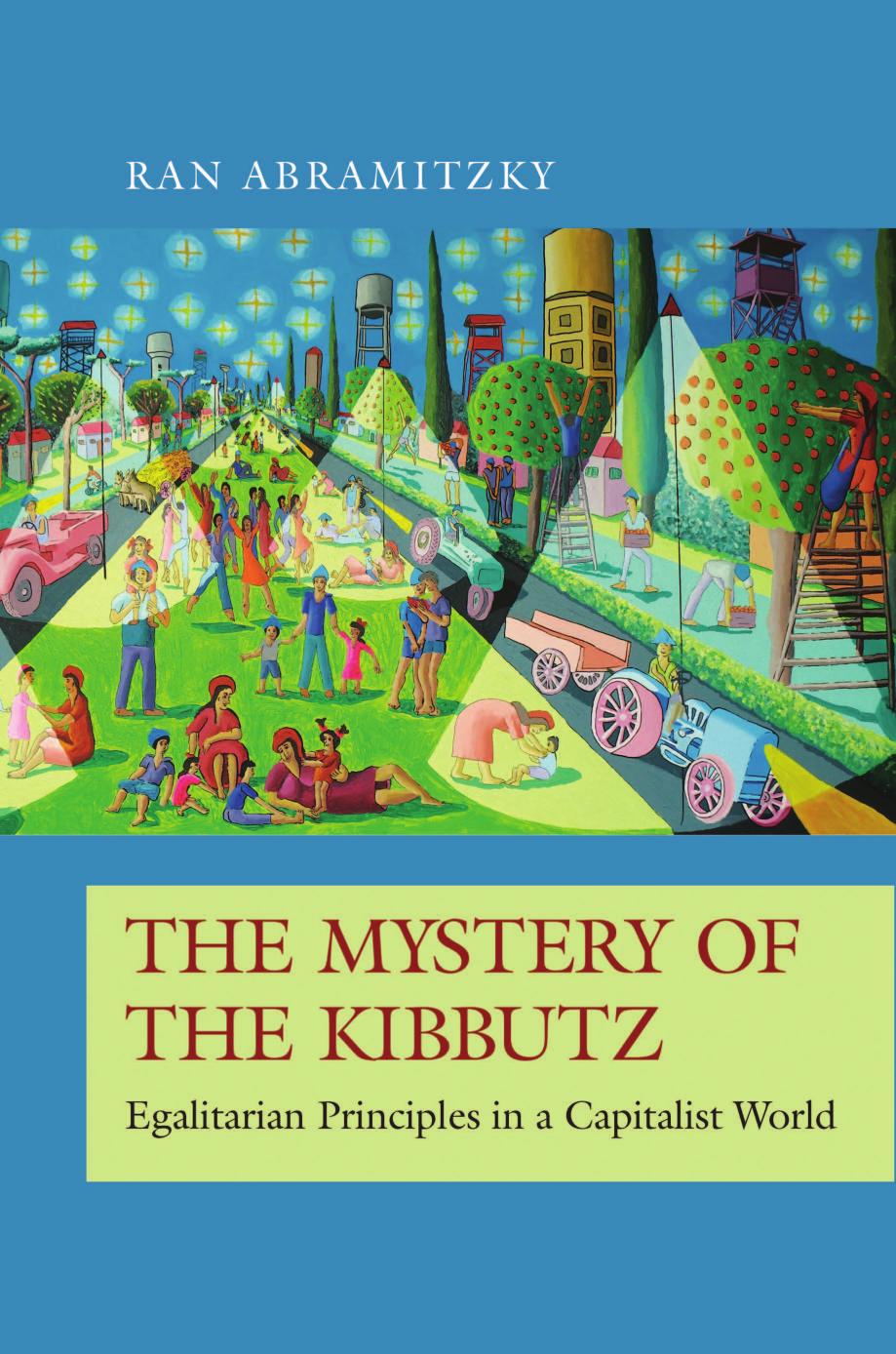
Author:Ran Abramitzky [Abramitzky, Ran]
Language: eng
Format: epub, pdf
Publisher: Princeton University Press
Published: 0101-01-01T00:00:00+00:00
THE SHIFT AWAY FROM EQUAL SHARING
It became increasingly clear that the kibbutz system could not continue to work in the absence of fundamental changes. As early as in 1988, Yehuda Harel of Kibbutz Merom Golan called for a “new kibbutz”, suggesting that kibbutzim should make substantial reforms if they wished to survive. Harel’s idea was to separate the economy and the community. The economy would be run capitalist-style, whereas the community would continue to be run socialist-style. The income would still be based on need rather than work, but members would be free to spend it as they wished (Russell et al. 2013). In 1993, Harel formulated these ideas in a book titled The New Kibbutz. This proposal sparked widespread debate in kibbutzim and resonated with many, including those who didn’t believe in the kibbutz way of life, those who long believed changes were needed, and those who were disillusioned by the collapse of communism in Central and Eastern Europe.
It took many years before kibbutzim adopted Harel’s proposals, which were considered extreme at the time even though they proposed maintaining the full egalitarian model. When he formulated his proposals, Harel was still a socialist who devoted his life to the kibbutz idea. He was simply looking for ways to maintain socialism and improve the kibbutz economy. He later became a libertarian and published a book in 2010 in which he analyzes the reasons for the failure of the big ideologies in the twentieth century, and the kibbutz ideals in particular.
In the early 1990s, kibbutzim began discussing whether and how to adjust to the new times, and suggesting practical ways to implement changes. The talk became action, and so began the kibbutz transformations known as hafrata (Hebrew for “privatization”) that continue today. Seventy-five types of reform occurred over the 1990s—ranging from reforms in the way kibbutzim make decisions and govern their economy, reforms that increase the role of nonmembers in the community and economy, and reforms in the relationship between the kibbutz and its members. The first wave of reforms was designed mainly to increase efficiency and reduce wastage, both in consumption and production. On the consumption side, kibbutzim had long felt that they lived beyond their means and that there was a lot of wastage. As Gavron (2000, p. 9) put it:
[T]he kibbutzim were living beyond their means was an acknowledged fact, but there were also several endemic weaknesses in communal life, one of which was wastage. Food was “free,” so members took more than they needed. Huge quantities were thrown away, and expensive items were fed to domestic animals. Electricity was paid for by the collective, so members left their air conditioners on all day in the summer and their heaters on all winter.
Eventually many kibbutzim, including Negba, Heftziba, and Ramat HaKovesh, privatized most services, meaning members had to pay for their food, laundry, and electricity. By 2001, 20 percent of kibbutzim had hired a contractor to run the kitchen.16 In most cases, the kibbutz remained responsible for other services such as health care, daycare, roads, paths, gardening, and culture.
Download
The Mystery of the Kibbutz: Egalitarian Principles in a Capitalist World by Ran Abramitzky.pdf
This site does not store any files on its server. We only index and link to content provided by other sites. Please contact the content providers to delete copyright contents if any and email us, we'll remove relevant links or contents immediately.
| Africa | Americas |
| Arctic & Antarctica | Asia |
| Australia & Oceania | Europe |
| Middle East | Russia |
| United States | World |
| Ancient Civilizations | Military |
| Historical Study & Educational Resources |
Cecilia; Or, Memoirs of an Heiress — Volume 1 by Fanny Burney(32562)
Cecilia; Or, Memoirs of an Heiress — Volume 2 by Fanny Burney(31959)
Cecilia; Or, Memoirs of an Heiress — Volume 3 by Fanny Burney(31945)
The Secret History by Donna Tartt(19102)
Sapiens: A Brief History of Humankind by Yuval Noah Harari(14393)
Leonardo da Vinci by Walter Isaacson(13341)
The Radium Girls by Kate Moore(12035)
Sapiens by Yuval Noah Harari(5375)
How Democracies Die by Steven Levitsky & Daniel Ziblatt(5224)
The Wind in My Hair by Masih Alinejad(5101)
Homo Deus: A Brief History of Tomorrow by Yuval Noah Harari(4923)
Endurance: Shackleton's Incredible Voyage by Alfred Lansing(4788)
Man's Search for Meaning by Viktor Frankl(4611)
The Silk Roads by Peter Frankopan(4538)
Millionaire: The Philanderer, Gambler, and Duelist Who Invented Modern Finance by Janet Gleeson(4482)
The Rape of Nanking by Iris Chang(4222)
Joan of Arc by Mary Gordon(4117)
The Motorcycle Diaries by Ernesto Che Guevara(4106)
Stalin by Stephen Kotkin(3973)
